Are Standing Desks Worth It? An Honest Look for Home Workers
Gearabout is reader-supported. When you buy through links on this page, we may earn a small commission — at no extra cost to you. Learn more.
Standing desks have gone from niche to everywhere, and the marketing around them can be breathless — burn calories! boost productivity! fix your back! If you work from home and you’re wondering whether one is actually worth the money and desk space, you deserve a straight answer rather than a sales pitch.
Here’s the honest version: a standing desk is genuinely worth it for most people who sit and work all day — but not for the reasons the ads usually claim. Let me explain what a standing desk actually does, what it doesn’t, and how to know if it’s right for you.
The real benefit: movement, not standing
The core problem a standing desk solves isn’t “sitting is bad” in some absolute sense — it’s that staying in any one position for hours is bad. Sitting motionless all day leaves you stiff, low-energy, and sore. But standing motionless all day isn’t great either.
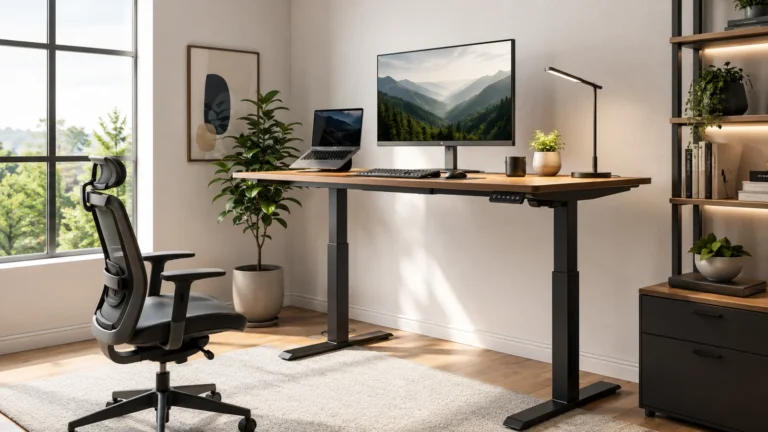
The genuine value of a sit-stand desk is that it lets you change position easily throughout the day. Sit for a while, stand for a while, shift your posture, move. That variation is what keeps you comfortable and energized. The desk is a tool for breaking up static posture, not a magic health device.
This reframing matters, because it tells you what to actually do with one: alternate. The people who benefit most aren’t the ones who stand rigidly for eight hours — they’re the ones who switch between sitting and standing a few times a day.
What a standing desk genuinely helps with
Based on the honest, non-hyped case:
Reduced afternoon slump. Many people find that standing for parts of the day keeps their energy and focus up, especially during the post-lunch dip when sitting makes you drowsy.
Less stiffness and discomfort. Alternating positions reduces the neck, shoulder, and lower-back stiffness that comes from sitting motionless for hours. For people with mild back discomfort from long sitting, this is often the biggest win.
More movement, generally. Standing makes it easier to shift your weight, stretch, and stay loosely active rather than frozen in a chair. Small movements add up.
A sense of control over your workspace. It sounds minor, but being able to adjust your environment to how your body feels on a given day is genuinely pleasant.
What a standing desk won’t do
Being straight about the overblown claims:
It’s not a weight-loss device. Standing burns marginally more calories than sitting, but the difference is small — nowhere near enough to matter for weight on its own. Don’t buy one expecting to lose weight.
It won’t fix bad posture by itself. If you stand hunched over with your monitor too low, you’ll just have bad posture standing up. The desk enables good ergonomics; it doesn’t guarantee them.
It won’t help if you never use the standing function. This is the big one. Plenty of people buy a standing desk, use it standing for a week, and then leave it in sitting position forever. A standing desk you don’t raise is just an expensive regular desk. The features that make raising it effortless — one-touch memory presets — are what determine whether you actually use it.
Who should get one
A standing desk is likely worth it if:
- You work at a desk for many hours a day, especially from home
- You experience stiffness, back discomfort, or an energy crash from long sitting
- You’ll actually use the standing function (be honest with yourself)
- You have the desk space and budget for it
It’s probably not worth it if:
- You only spend an hour or two at your desk
- You know yourself well enough to know you’ll never raise it
- You’re buying it purely for weight loss or a health claim
If you get one, get these things right
To actually benefit, a few practicalities matter more than the desk brand:
Easy height presets. A desk where you hold a button forever is a desk you’ll stop adjusting. One-touch memory presets are what keep the habit alive. This is the feature to prioritize.
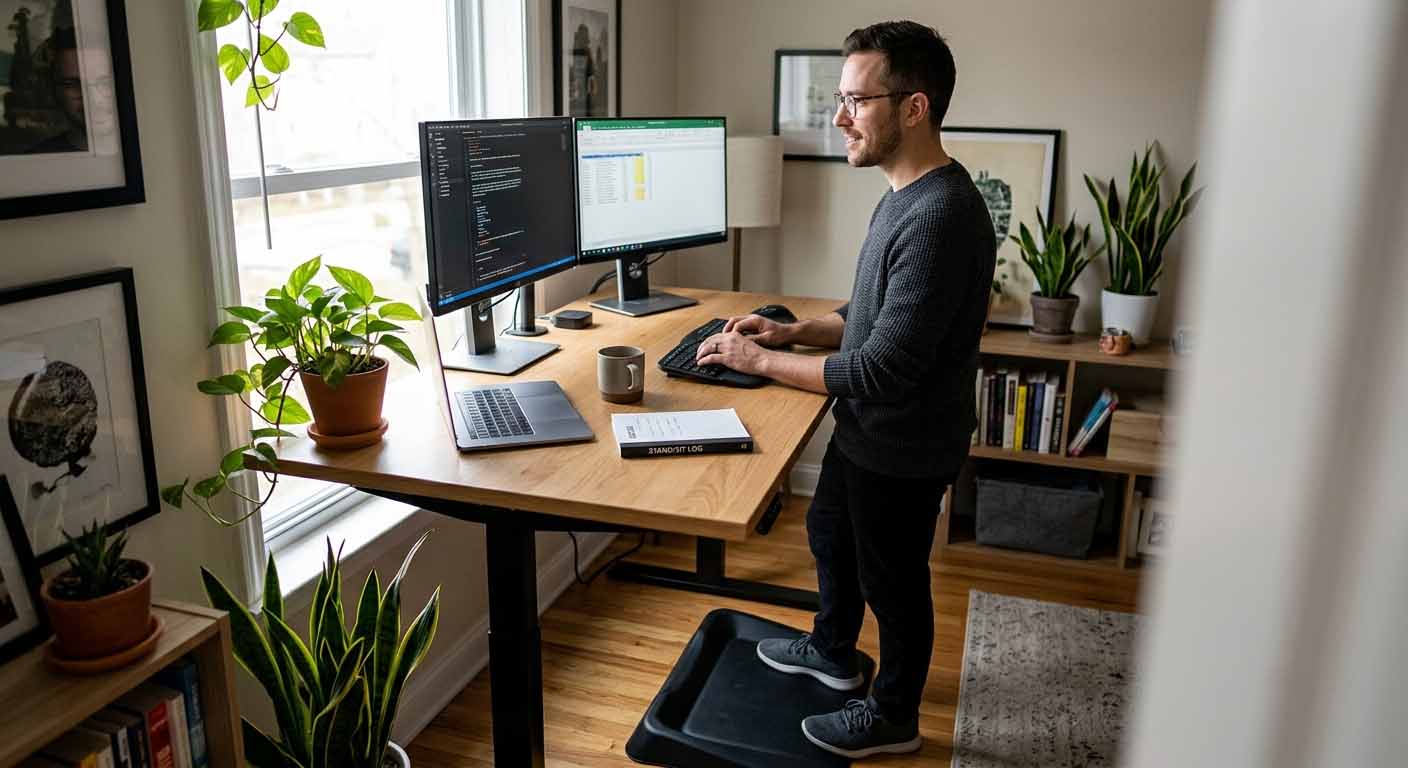
Correct ergonomics at both heights. Your monitor should be at eye level and your elbows around 90 degrees, whether sitting or standing. A monitor arm helps you nail this at both positions.
An anti-fatigue mat. Standing on a hard floor for long stretches has its own downside — sore feet and legs. A cushioned anti-fatigue mat makes standing far more comfortable and is a cheap, high-impact addition.
Start gradually. Don’t go from all-sitting to all-standing overnight — your legs and feet need to adjust. Begin with 20–30 minute standing stretches and build up.
Actually alternate. Set a loose rhythm — stand for a call, sit to focus, stand after lunch. The benefit is in the switching.
Do you need to spend a lot?
No. The core benefit — easy electric height adjustment with memory presets — is available on budget-friendly desks. You spend more mainly for premium materials, higher weight capacities (for heavy multi-monitor setups), longer warranties, and smart features. But a modestly-priced electric sit-stand desk with solid stability and one-touch presets delivers the actual value. Don’t feel you need a premium desk to get the benefit.
Frequently asked questions
They help by letting you break up long periods of sitting, which reduces stiffness and can improve energy and focus. The benefit comes from changing position throughout the day, not from standing constantly. They’re not a cure-all or a weight-loss tool, but for people who sit and work all day, the movement they enable is genuinely worthwhile.
Start with short stretches — 20 to 30 minutes at a time — and build up as your body adjusts. The goal is to alternate between sitting and standing throughout the day rather than standing for hours straight. A common rhythm is to switch every 30–60 minutes.
For back discomfort caused by long periods of sitting, alternating with standing often helps by reducing static strain. It’s not a medical treatment, and correct ergonomics matter, but many people with mild sitting-related discomfort find real relief.
No — standing motionless all day has its own downsides, like foot and leg fatigue. The healthiest approach is variation: alternate between sitting and standing, and move regularly. That’s the whole point of a sit-stand desk.
No. The key feature — easy electric height adjustment with memory presets — is available on affordable desks. Spend more only if you need premium materials, high weight capacity for multiple monitors, or a longer warranty.
The bottom line
Are standing desks worth it? For most people who work at a desk all day — yes, provided you’ll actually use the standing function and you set up the ergonomics properly. The real benefit is the ability to change position and stay comfortable and energized, not any single dramatic health claim. Skip the hype, get a desk with easy presets, add an anti-fatigue mat, and actually alternate — and it’ll be one of the better upgrades you make to your home office.
→ Ready to choose? See our picks for the best affordable standing desks.